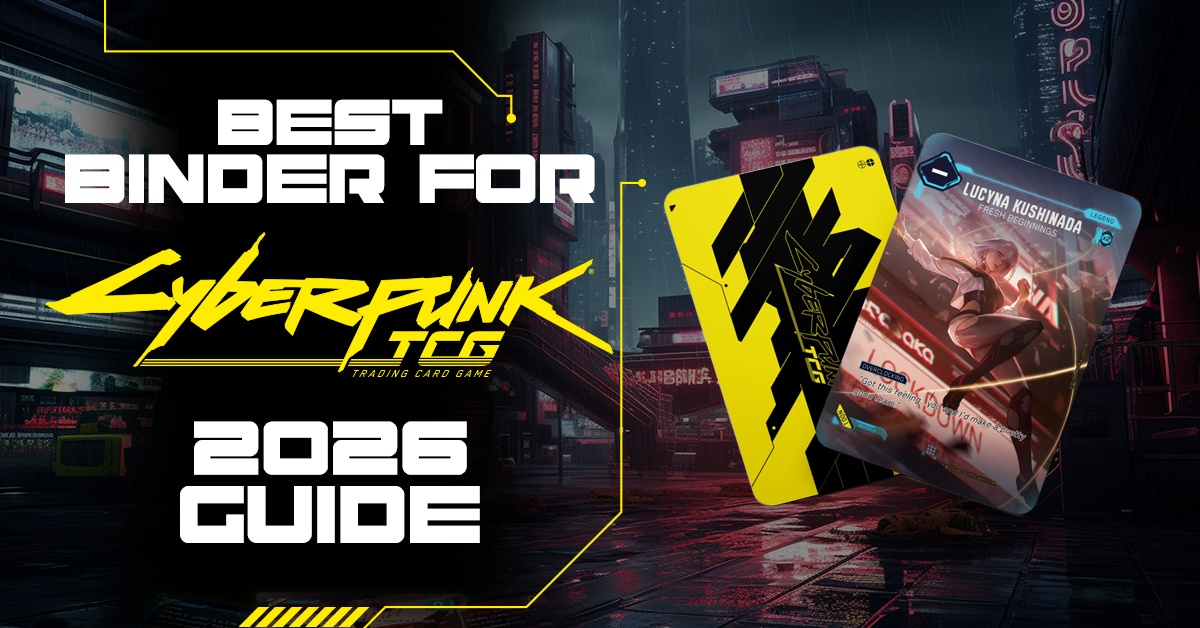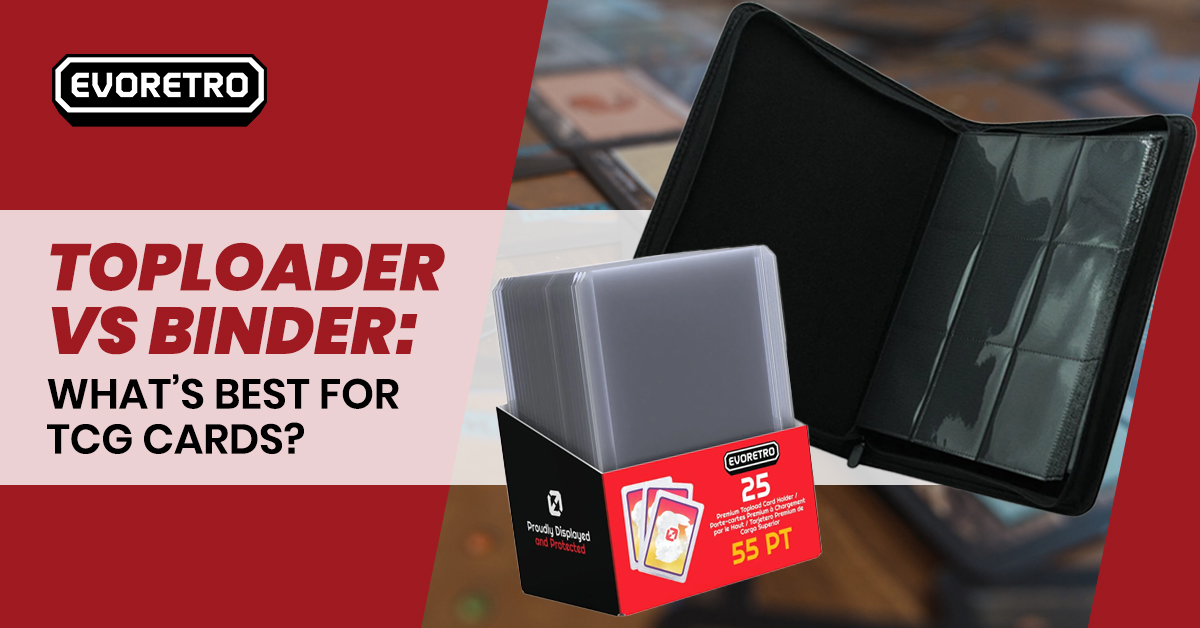
The rise of premium trading card games—especially with campaigns like the Cyberpunk Trading Card Game Kickstarter campaign—has collectors asking an important question:
How should you store your cards: toploaders or binders?

Whether you’re protecting rare pulls, organizing a growing collection, or preparing for tournaments, choosing the right storage method can make or break your collection’s long-term value.
In this guide, we’ll break down Toploader vs Binder, and show you how modern solutions from Evoretro combine the best of both worlds.
What Is a Toploader?

A toploader is a rigid plastic sleeve designed to provide maximum protection for individual cards.
Pros of Toploaders
- Excellent for high-value cards
- Prevents bending, creasing, and edge damage
- Ideal for shipping and long-term storage
Cons of Toploaders
- Bulky and hard to organize
- Not display-friendly
- Often stored in boxes (hard to browse)
👉 Many collectors end up with stacks of toploaders hidden away—safe, but not enjoyable to view.
What Is a Binder?

A card binder uses pages with pockets to organize and display cards.
Pros of Binders
- Easy to browse and showcase
- Great for set collections
- Space-efficient and portable
Cons of Standard Binders
- Less rigid protection than toploaders
- Cards can shift or bend over time
- Not ideal for ultra-valuable cards
The Evolution: Toploader Binders (Best of Both Worlds)
Modern collectors don’t have to choose anymore.
Innovations from Evoretro—especially their Kickstarter-backed designs—have introduced toploader binders, combining:
- Rigid protection (like toploaders)
- Organized display (like binders)
These solutions were built specifically for serious collectors who want protection + presentation.
For example, Evoretro’s designs feature:
- 360° zip protection
- Water-resistant materials
- Dedicated slots for toploaded cards and graded slabs
- Moisture control compartments
Featured Storage Solutions from Evoretro
1. Toploader Binder (3×3 Layout)

A premium solution for collectors who already use toploaders.
- Holds up to 216 toploaded cards
- Zipper closure for dust protection
- Microfiber leather + acid-free pages
- Built for Pokémon, MTG, sports cards, and more
👉 Perfect for high-value collections you still want to flip through
2. 9-Pocket Zip-Up Card Binder

A classic upgraded binder with modern protection.
- Ideal for raw cards (non-toploaded)
- Lightweight and travel-friendly
- Great for set collectors and casual play
👉 Best for organized collections and everyday use
3. Slab Binder (Graded Cards)
Designed for PSA, Beckett, and slabbed cards.
- Secure storage for graded cards
- Display + transport in one system
- Built for collectors attending events or trade shows
👉 Best for investors and high-end collectors
Toploader vs Binder: Quick Comparison
| Feature | Toploader | Standard Binder | Toploader Binder |
| Protection | ⭐⭐⭐⭐⭐ | ⭐⭐⭐ | ⭐⭐⭐⭐⭐ |
| Organization | ⭐⭐ | ⭐⭐⭐⭐⭐ | ⭐⭐⭐⭐⭐ |
| Display | ⭐ | ⭐⭐⭐⭐⭐ | ⭐⭐⭐⭐⭐ |
| Portability | ⭐⭐ | ⭐⭐⭐⭐ | ⭐⭐⭐⭐ |
Winner?
👉 For modern collectors: Toploader Binder
Why This Matters for New TCGs Like Cyberpunk
With the launch of the Cyberpunk Trading Card Game Kickstarter campaign, collectors are expecting:
- Limited prints
- Premium artwork
- Long-term collectible value
That means storage isn’t just about convenience—it’s about investment protection.
Pairing your collection with high-end accessories from Evoretro ensures your cards stay:
- Mint condition
- Organized
- Ready for display or resale
Final Verdict: What Should You Choose?
- Use toploaders → For ultra-rare, single-card protection
- Use binders → For casual collections
- Use toploader binders → For the ultimate collector setup
👉 If you want serious protection without sacrificing presentation, modern hybrid solutions are the clear winner.
Bottom Line
The debate between Toploader vs Binder is evolving.
Collectors today—especially those entering new ecosystems like Cyberpunk—are moving toward premium hybrid storage that protects, organizes, and showcases cards all at once.
If you’re building a collection you’re proud of, don’t just store it.
Show it. Protect it. Future-proof it.